


Growing Fire
3.737.00 Reviews
App Specs
- Version
- 005
- Updated On
- License
- Free
- Downloads
- 100,000+
- Developer
- KAYAC Inc.
- Categories
- Arcade
- Platform
- Android
Screenshots
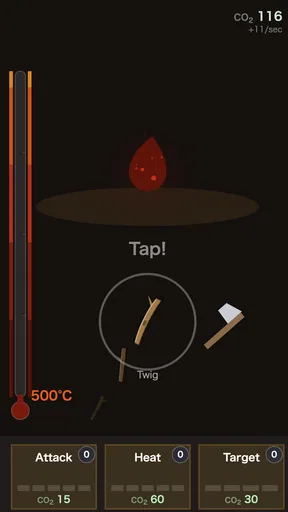
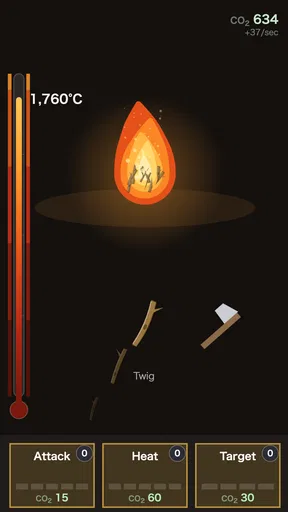
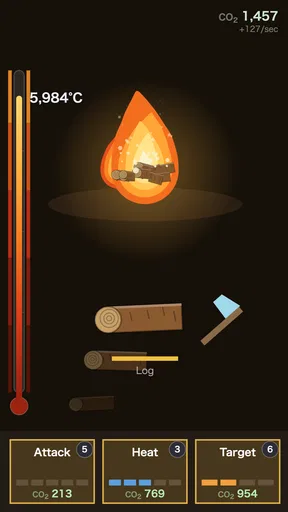
 Analysis by AppCompare
I’d consider Growing Fire when I want a small arcade game that asks for quick attention rather than a long session. Its core idea is easy to grasp: tap to chop, then use what you gather to keep a fire going as the scale of the spectacle grows. That simplicity is its strongest selling point, but it also sets expectations. This is a game for brief bursts of playful progress, not for players looking for a deep campaign, a complicated control scheme, or a detailed survival simulation.
Made by KAYAC Inc., this free arcade game has a Teen content rating. It has a 3.7 average from around 230 ratings and more than 50,000 installs. Those figures suggest a modest audience and a mixed response rather than a universal crowd-pleaser. I’d treat it as an easy-to-try distraction, while keeping in mind that a one-action premise will naturally feel repetitive to anyone who needs frequent mechanical changes.
What to consider before you start tapping
I’d start by asking whether a single, repeatable action sounds relaxing or tiresome to you, because that preference matters more here than chasing a long feature list. I’d also check the Teen rating and Android 7.1 requirement before handing it to someone else or trying it on an older phone. With those basics in mind, the next question is what makes this particular arcade loop worth a try.
A clear loop, with a specific kind of appeal
The appeal is the contrast between a very small action and an increasingly outsized result. Chopping begins with the familiar image of gathering fuel, while the promise of reaching an absurdly grand scale gives the routine a comic arcade flavor. I find that a useful distinction: the game’s hook is not realistic fire management, but the satisfaction of watching a simple task build toward something extravagant.
That makes it a better fit for players who enjoy incremental-feeling arcade play than for people expecting a traditional score-chasing game with a wide range of controls. The store summary captures the broad premise, but the practical question is whether repeating a tap-centered action remains enjoyable for you. If you like watching a small input lead to a bigger visual payoff, the idea has a natural pull. If you quickly tire of doing the same basic thing, the novelty may fade.
When a short session makes sense
I can imagine opening it during a coffee break, while waiting for a friend, or in the few minutes before heading out. Its one-action premise is easy to understand without setting aside time to learn a complex system. In that everyday situation, the main benefit is low friction: I can pick up the idea quickly and decide for myself whether I want another short go.
It is less suitable when I want a game to occupy a whole commute or provide a substantial evening of play. A simple loop can be calming and satisfying, but it does not automatically provide the variety that a longer session needs. I would approach it as a pocket-sized arcade diversion, not as a replacement for a game built around extended levels, narrative progress, or a broad set of challenges.
Worth Reading Before You Choose

EA SPORTS FC Mobile 26 Is a Bigger Football Game, but It Takes Time

Flipboard Shows What News Apps Must Do Beyond the Feed

Switching to Android Auto Means Rethinking Your Driving Routine

Google Calendar Makes a Crowded Week Easier to Manage

Ludo King Makes the Most of the Minutes Between Plans

Baby Panda World Brings Quick Play to Modern Phones, but Its Game Library Feels Busy
Why the scale is more than a throwaway joke
The leap from collecting ordinary fuel to imagining something as enormous as a galaxy gives the concept its own identity. That escalation is a more specific hook than simply tapping for points: it invites the player to enjoy the increasingly ridiculous destination as much as the action itself. My advice is to judge the game by whether that sense of growth makes the repeated chopping fun, rather than expecting the premise alone to guarantee lasting depth.
There is also a useful expectation check here. The wording points toward an arcade fantasy, not a realistic lesson about fire, resource use, or wilderness skills. If you come in wanting a playful exaggeration, the premise makes sense. If you are after tactical resource planning or a grounded outdoor experience, a survival or crafting game would be a closer match.
Where Growing Fire stands out among arcade choices
The distinction I notice is its pairing of ordinary chopping with a deliberately outsized sense of growth, rather than a focus on reflex tests or changing obstacles. That makes it a useful contrast when I’m choosing between quick arcade styles: the appeal is watching a modest action build toward a ridiculous scale. Whether that feels rewarding depends on how much you enjoy repetition serving a clear, playful payoff.
It favors immediate understanding over a learning curve
Many arcade games ask players to react to moving hazards, manage several controls, or memorize patterns. Growing Fire’s chopping-and-fueling premise is more direct. I see that as a strength for casual play: a friend can understand the basic idea without needing a long explanation, and there is little conceptual overhead before the central action begins.
The trade-off is equally clear. Games with multiple actions or changing objectives can refresh their rhythm more often. A tap-led loop has to earn its appeal through the feeling of progression and the scale of its outcome. If the basic interaction does not click for you, there may be less variety to fall back on than in a platform arcade game or a puzzle game that continually introduces new problems.
A useful way to test whether the loop suits you
Rather than deciding from the premise alone, I’d pay attention to how the first short session feels. Am I tapping with a sense of purpose, curious about what comes next, or am I already wishing for a different action? That reaction is a better guide than the grandest part of the concept. With a focused arcade mechanic, personal tolerance for repetition matters more than a long feature checklist.
A second practical test is to notice whether the game feels satisfying in small pieces. If I can enjoy a brief visit and put it down without feeling that I need a long uninterrupted run, it is doing the job I want from a casual arcade title. If I keep waiting for a deeper mode or a more involved system, I should choose a different genre rather than hoping the simple premise will turn into something else.
What its audience signals—and what they do not
The current version is 005, and the game has attracted a smaller audience than the best-known arcade releases. I read that as a reason to approach it with measured expectations, not as proof that it is either poor or hidden treasure. Its average rating of 3.7 reflects a mixed reception, which fits a concept that can be immediately appealing to one player and too repetitive for another.
That makes the no-cost entry useful: I can try the core idea without paying upfront. Free does not mean the game will suit every mood, though. My recommendation is to keep the first session casual and decide based on the feel of the interaction. I would not install it expecting a large collection of modes or a constantly changing challenge unless those qualities are clearly visible when I play.
When another kind of game is the better choice
I’d look elsewhere when I want each session to bring a different kind of challenge, or when I’m in the mood for a story, strategy, or believable survival decisions. A runner or platform game can suit a reflex-focused mood, while puzzles are better when I want to think through varied problems. The choice is less about which genre is best and more about what kind of attention I want to give a game.
Choose a different arcade game for constant variety
If I want quick reactions, changing obstacles, or a fresh stage structure each time I play, I’d lean toward a platformer, runner, or score-attack arcade game instead. Those categories often make variety the central attraction. Growing Fire takes a narrower route: it builds its identity around chopping and fueling, so it is the better pick only when that concentrated loop sounds enjoyable in its own right.
Likewise, a puzzle game is a better choice if I want each move to involve a new decision or a problem to solve. A clicker or incremental game may be closer if I mainly enjoy watching progress accumulate, though the actual feel of any alternative depends on its own design. The helpful comparison is not that one genre is automatically superior, but that Growing Fire’s core appeal is a simple physical action paired with an exaggerated sense of growth.
Skip it if you want realism or long-form structure
I would steer away from this one if my goal were to learn real fire-building skills, manage a believable wilderness scenario, or make layered survival decisions. Its premise is deliberately arcade-like. Someone looking for a story-driven game, a carefully paced campaign, or a broad simulation will probably find a better match in a title designed around those expectations.
It may also be a poor choice for a player who dislikes repeated tapping as a central interaction. Even a clever theme cannot erase that preference. If repetitive inputs make a game feel like a chore, I would not try to talk myself into it just because the scale sounds amusing. A game with movement, aiming, puzzles, or strategic choices would offer a more comfortable fit.
Think about device compatibility before committing
The minimum operating-system requirement is Android 7.1, so I would check that my device meets it before trying to install the game. That is a practical detail worth resolving upfront, especially on an older phone. The current version is 005, a concise version label that identifies the release without telling me anything by itself about how much the experience has changed over time.
Its Teen age rating is another simple decision point. I would take that rating into account when choosing a game for a younger player rather than assuming that a playful premise makes it appropriate for every age. For adults deciding for themselves, it is still worth checking whether the game’s tone and content suit the person who will actually be playing.
The real cost is attention, not an entry fee
Since there’s no upfront price, I’d treat the first session as a low-stakes test rather than a commitment. The real trade-off is whether the repeated tapping feels satisfying enough to earn a spot in my short-break routine; if it doesn’t, switching to another arcade style is easy. I’d judge it after giving the central action a little focused attention, not while distracted between other tasks.
Free makes sampling easy, but time still matters
Because Growing Fire is free, trying it does not require an upfront purchase. That lowers the barrier for a curious arcade fan, but the more useful question is whether the repeated action earns a place among the games I return to. I would treat a short trial as a way to assess the loop, not as a promise that the game will become a long-term habit.
For a casual player, the cost of switching from another simple arcade game is low if the goal is just to sample a different premise. For a player who has already invested in a game with layered progression, a large set of challenges, or a strong story, switching means giving up those deeper reasons to return. Growing Fire makes most sense when I want a lighter alternative, not when I expect it to replace every kind of mobile game I enjoy.
How to get a fair read on it
I’d give the game a focused, short try rather than judging it after a distracted minute. The reason is specific to its design: the appeal depends on whether chopping and feeding the fire feel satisfying as the scale expands. A little attention makes it easier to notice whether the premise is carrying the interaction or whether I am simply repeating taps without much interest.
I would also avoid comparing it only with games that have elaborate systems. That can make any narrow arcade concept seem slight by default. The fair comparison is with other quick diversions: does this particular combination of chopping, fueling, and extravagant growth make me want to return? If not, there is no need to force it; a runner, puzzle, or strategy game may match my preferences better.
My recommendation
I’d give Growing Fire a try if I want a compact arcade diversion and enjoy seeing a simple action lead to an exaggerated result. I’d pass if I already know that repetitive inputs frustrate me or if I’m looking for sustained variety. My practical recommendation is to sample it in a brief break, then let the feel of the loop—not the scale of the premise—decide whether it belongs on your device.
A focused arcade pick for the right mood
I’d recommend Growing Fire to someone who enjoys uncomplicated arcade games, likes watching a small action lead to a large-scale payoff, and is happy to play in short bursts. Its concept is easy to explain, its entry price is free, and the jump from ordinary fuel to an almost cosmic image gives it a recognizable personality. For a quick break, that combination can be enough.
I would not recommend it to someone who needs a steady stream of new mechanics, wants a serious survival experience, or prefers games built around complex goals and long sessions. The simple loop is both the game’s advantage and its clearest limitation. That is why the mixed average rating does not surprise me: a focused premise can be charming when it matches your mood and repetitive when it does not.
Who should give it a try
If you are browsing free arcade games and want something that can be understood at a glance, this is a reasonable one to sample. I’d go in expecting a compact, tap-centered experience, not a deep simulation or an all-purpose mobile game. Its Teen rating and Android 7.1 minimum are worth checking if you are choosing it for someone else or using an older device.
My final advice is straightforward: try it when you want a brief, playful change of pace, and move on if the central action stops feeling satisfying. The game has a distinctive scale-based joke and a very accessible premise, but it does not need to be more than that to serve its audience. For the right player, a few minutes of chopping toward an absurdly grand fire is the whole point; for everyone else, a more varied arcade or puzzle game will be a better use of time.
Pros
- Quick
- accessible gameplay is easy to pick up in short sessions.
- Progression gives players a steady reason to return and improve.
- Combat offers a satisfying sense of growth as your character gets stronger.
- A straightforward interface keeps core actions easy to find.
- Free-to-play access lets you try the game without an upfront purchase.
Cons
- Repeated combat can make the gameplay feel routine over time.
- Progress may slow down later
- encouraging longer play or purchases.
- Some upgrades and systems may take time to understand.
- Frequent effects and enemies can make the screen feel busy.
- Performance and battery use may vary depending on your device.
FAQs for Growing Fire
What is Growing Fire?
Growing Fire is the name of an app or game, but without a verified store listing or publisher details, its exact purpose and gameplay cannot be confirmed. Before downloading, check the app’s official description, screenshots, developer name, and recent user reviews. These details can help you determine whether it is a game, a utility, or another type of app, and whether it matches what you are looking for.
Is Growing Fire free to download and use?
The download price and any additional costs may vary by platform, region, and version. Check the Google Play Store or Apple App Store listing for the current price and look for notices about in-app purchases, subscriptions, advertising, or paid features. If the listing does not clearly explain these costs, review its payment information before installing or making a purchase.
Is Growing Fire available for Android and iOS?
Availability depends on whether the developer has published Growing Fire for your device and in your country. Search for the exact app name in the official Google Play Store or Apple App Store, and verify that the publisher and app details are consistent with the source you expect. Avoid unofficial download files or third-party links, which may be outdated, altered, or unsafe.
What permissions or personal information might Growing Fire require?
The permissions requested by Growing Fire depend on its features and the version you install, so check the app’s permission prompts and privacy information before granting access. Consider whether requests for location, contacts, camera, microphone, or other sensitive data make sense for the app’s stated purpose. You can also review the store’s data-safety or privacy-label section and deny permissions that are not necessary.
How can I check whether Growing Fire is safe and compatible with my device?
Use the official app-store listing to confirm the developer, supported operating-system version, update history, and user feedback. Read recent reviews for reports of crashes, intrusive ads, or unexpected charges, while remembering that individual experiences can differ. Keep your device’s operating system updated, install only from a trusted store, and make sure the app’s requested access and privacy practices are acceptable to you.


